Studio Time Cost Lagos: Honest Pricing Breakdown for Creators
Studio time cost Lagos depends on the room, engineer, session type, and final deliverables. Use this practical guide to plan your recording, podcast, or production booking.
# Studio Time Cost Lagos: Honest Pricing Breakdown for Creators
If you are trying to understand studio time cost Lagos before booking a session, start with this: the room is only one part of the bill. A good recording day also depends on the engineer, the setup time, the type of project, the amount of editing needed, and how prepared you are when you arrive. Lagos has everything from small voice booths to full production rooms, but the right choice is not always the cheapest room or the most expensive one. The right choice is the room that fits the work.
This guide breaks down what affects cost, what to ask before you book, and how to avoid wasting money once the clock starts.
1. Know what kind of session you are booking
Studio pricing makes more sense when you are clear about the session type. A vocal recording day, a podcast episode, a live band capture, a voice-over, and a filmed performance do not use the same room in the same way.
For a solo vocal session, you may need a controlled booth, a strong microphone chain, good monitoring, and an engineer who can move quickly through takes. For a podcast, you need reliable speech capture, multiple microphones if there are guests, clean headphone routing, and a quiet room that lets the conversation breathe. For a music video performance, the room, lighting access, power, loading area, and camera movement may matter more than the vocal chain.
That is why one creator can book a short voice session and another can need a full production day. Before asking, "How much is studio time?", ask, "What am I trying to make?"
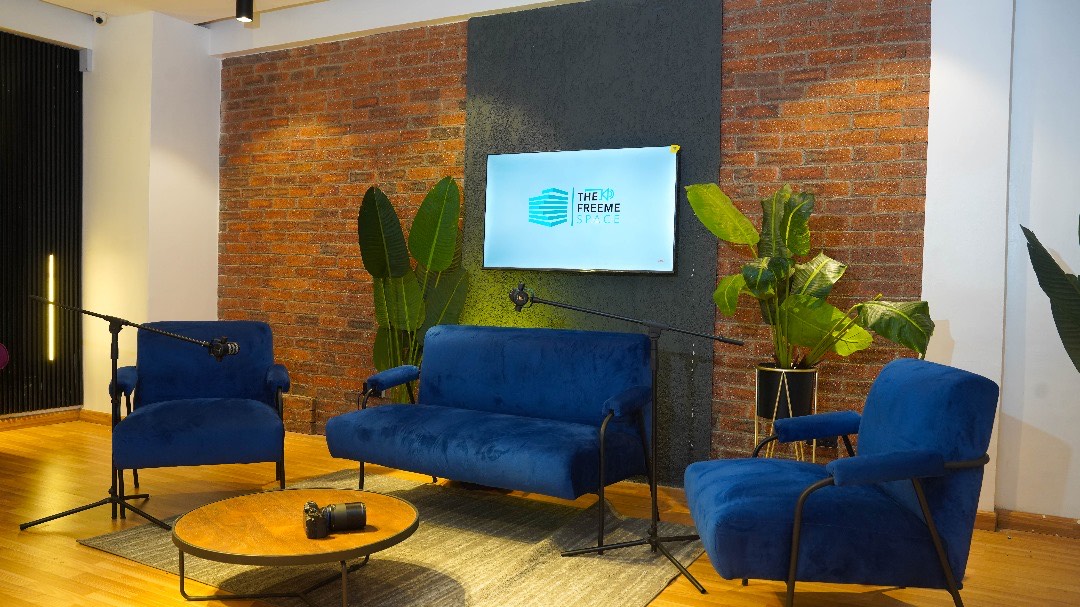
At FreeMe Space, creators use different rooms for different jobs. The podcast studio is built for clean spoken-word recording, interviews, and creator-led shows. The soundstage works better for larger shoots, performance content, content days, and visual production. Matching the room to the project is the first way to control cost.
2. Separate recording, editing, mixing, and mastering
Many first-time clients hear "studio time" and assume it includes everything from recording to final delivery. Sometimes it does. Often, it does not.
Recording is the time spent capturing the performance. Editing is where the engineer cleans takes, arranges sections, removes obvious problems, and prepares the session. Mixing balances the vocals, instruments, effects, and space so the record or episode sounds finished. Mastering is the final polish and level check for release.
For podcasts, there may also be noise cleanup, intro and outro placement, guest audio repair, clip exports, captions, or short-form cutdowns. For music, there may be comping, tuning, ad-libs, harmonies, vocal alignment, stem exports, and instrumental revisions.
If you do not ask what is included, the quote can look low at first and become frustrating later. Ask the studio to state clearly:
- •What the booked session includes
- •What happens after the session
- •Whether editing is billed separately
- •Whether mixing or mastering is included
- •How many revisions are included
- •What file formats you receive
The honest price is the full production cost, not just the room cost.
3. Engineer experience changes the value of the hour
Two rooms can charge differently because the people running them are not offering the same thing.
A strong engineer saves time. They hear problems early. They know when a vocalist needs a break, when a headphone mix is hurting the performance, when a take is good enough, and when the arrangement needs one more pass. They can also keep the session calm, which matters more than people admit.
An inexperienced engineer can still do good work, but the session may move slower. You might spend more time fixing gain issues, retaking sections, adjusting headphone levels, or discovering problems after the artist has left. A lower hourly cost can become more expensive if the session needs too many repairs.
When judging studio time cost Lagos, ask about the engineer, not only the room. Ask what kinds of sessions they handle most often. Ask for recent examples. Ask whether the same person records and mixes, or whether the project moves to another engineer after tracking.
You are not only renting walls and equipment. You are paying for judgment.
4. Room quality affects how much work is needed later
Acoustics are invisible until they become a problem.
An untreated room can add harsh reflections, boxy midrange, low-end buildup, or background noise. You may not notice it while recording, especially if everyone is excited and the monitors are loud. The issue usually appears later, when the mix feels difficult or the voice refuses to sit properly.
A well-treated room gives the engineer a cleaner recording to work with. That reduces editing stress and helps the final product sound more professional. For spoken-word content, it can mean less noise reduction and a more natural voice. For music, it can mean fewer problems with tone, sibilance, and room reflections.
This is why the cheapest room is not always the cheapest project. If the audio is messy, you pay in time, revisions, and sometimes re-recording.
Before booking, ask whether the room is built for voice, music, film, podcasting, or multipurpose production. A space that works for one job may not work for another.
5. Booking length matters more than people think
Short bookings can be useful, but they leave little room for setup, warm-up, technical checks, and creative decisions. If a two-hour booking starts late because files are missing or the performer needs time to settle, the session gets squeezed quickly.
Longer bookings usually give the project breathing room. The team can check microphones properly, test headphones, record alternatives, and review takes before moving on. For music, this can mean capturing the main vocal, doubles, ad-libs, harmonies, and a clean reference bounce without panic. For podcasts, it can mean recording the episode, pickups, intros, sponsor reads, and social clips while the guests are still in the room.
That does not mean every project needs a full day. It means you should book enough time for the real workflow, not just the moment when the record button is on.
Here is a simple way to estimate:
- •One short voice-over: plan for setup, delivery, pickups, and file export
- •One podcast episode: plan for guest setup, soundcheck, recording, retakes, and backups
- •One song vocal session: plan for lead takes, doubles, ad-libs, review, and rough balance
- •One filmed performance: plan for lighting, camera tests, playback, multiple takes, and resets
If your session involves more people, more gear, or more deliverables, add time.
6. Preparation is the cheapest discount
The fastest way to reduce studio spend is to arrive ready.
For artists, that means the song is written, the lyrics are accessible, the instrumental is ready, references are chosen, and the arrangement is mostly settled. For podcasters, it means the topic is clear, the guest is confirmed, questions are prepared, releases are handled, and everyone knows the recording time. For brands, it means the script is approved before the talent arrives.
Do not use paid studio time to search WhatsApp for the latest beat, rewrite the hook from scratch, debate the episode title, or wait for a logo file. Some creative changes are normal. Total confusion is expensive.
Bring these before you arrive:
- •Final or near-final lyrics, script, outline, or run of show
- •Reference tracks or reference episodes
- •Instrumentals, stems, or backing tracks in the correct format
- •Names and roles for everyone attending
- •Any brand assets needed for filmed content
- •Clear delivery requirements
- •A contact person who can approve decisions quickly
Good preparation does not kill creativity. It gives the session enough structure for creativity to happen without wasting the booking.
7. Ask what equipment is actually needed
Not every project needs the biggest room or the most complicated setup.
A solo podcast does not need a large stage. A simple vocal demo may not need a full visual production environment. A performance video might need space, lighting, and power more than a complex recording chain. A final mix review might belong in a listening or immersive room, not a tracking room.
For projects that need spatial or premium audio review, FreeMe Space has a Dolby Atmos suite. That kind of room is useful when the listening experience itself matters, especially for immersive audio decisions, playback checks, and higher-end mix review. For events, creator showcases, playback moments, and private presentations, the event lounge may be the better fit.
Do not book prestige. Book function.
If a studio suggests extra gear, ask why it is needed. Sometimes the answer will be valid. Sometimes the simpler setup will be better and faster.
8. Understand the cost of bringing a team
More people can make a session better, but they can also slow it down.
Managers, friends, photographers, assistants, stylists, producers, guests, and label reps all affect the day. They need space. They ask questions. They request playback. They change the mood in the room. On visual shoots, every extra person affects movement, timing, and coordination.
Some studios have attendance limits. Some charge differently when a booking becomes a larger production. Some need advance notice for extra crew, lighting setups, parking, security, or late access.
Be honest about the number of people coming. It helps the studio recommend the right room, staff the session properly, and avoid surprises at the door.
For music sessions, keep the core room small unless the extra people have a clear role. For podcasts, limit the room to host, guest, producer, and technical support where possible. For filmed content, create a simple call sheet so everyone knows when they are needed.
9. Watch the hidden costs
The headline booking cost is not always the final cost. Some extra costs are fair. The issue is whether you know about them early.
Ask about:
- •Overtime
- •Late arrival policies
- •Cancellation and rescheduling rules
- •Extra engineering time
- •File backup and storage
- •Mixing and mastering
- •Video crew or lighting support
- •Additional microphones or special gear
- •Guest capacity
- •Weekend or late-night bookings
None of these should be awkward questions. A professional studio will explain what is included and what is not. That clarity protects both sides.
If the project has a fixed budget, say so early. A good studio can often suggest a practical way to fit the most important work into the available time.
10. Compare by outcome, not just price
The cheapest quote is not always the best deal. The highest quote is not automatically the best choice either.
Compare studios by asking what the session will produce. Will you leave with raw files only, a rough mix, a finished episode, edited clips, or a release-ready master? Will the engineer guide performance, or only press record? Is the room quiet enough? Is the location practical for guests and crew? Does the facility have the right space for both audio and visuals if the project needs both?
For a creator, the best studio spend is the one that gets the work finished with fewer delays, fewer revisions, and fewer compromises.
If your goal is a single clean podcast episode, choose the room that makes voice recording easy. If your goal is a music video performance, choose the room that supports movement, lighting, playback, and camera work. If your goal is a serious record, choose the team that can capture the performance properly and guide the next stage.
A simple booking checklist
Before you pay a deposit or lock a date, send the studio a short brief:
- •Project type
- •Number of people attending
- •Preferred date and time
- •Expected deliverables
- •Audio or video references
- •Gear needs, if any
- •Editing, mixing, or mastering expectations
- •Deadline
Then ask for a written quote that confirms the room, duration, included support, overtime policy, and post-session deliverables.
This one step prevents most budget confusion.
So, what should studio time cost in Lagos?
The practical answer is that studio time cost Lagos depends on the session, the room, the people, and the final deliverables. A simple recording can be lean. A full production day needs more planning and a different budget. A podcast, a music session, and a filmed performance should not be priced like the same job.
The better question is: what do you need the session to achieve?
If you can answer that clearly, a professional studio can recommend the right room, the right booking length, and the right support. That is how you avoid paying for things you do not need, and how you avoid underbooking a session that needs more care.
Ready to plan your session? Book a recording day, contact FreeMe Space for current rates, or schedule a tour of the podcast studio, soundstage, Dolby Atmos suite, and event lounge. Bring your brief, tell us what you are making, and we will help you choose the room that fits the work.