Recording Tips: 10 Practical Ways to Get Better Sound in a Lagos Studio Session
Recording tips for Lagos artists, podcasters, and creators who want cleaner studio sessions, better takes, and fewer wasted booking hours.
# Recording Tips: 10 Practical Ways to Get Better Sound in a Lagos Studio Session
Good recording tips are not complicated. Most of the things that improve a session happen before the red light comes on: the song is ready, the room is booked for the right job, the artist is rested, the engineer understands the target, and nobody is wasting paid hours searching for files. In Lagos, where traffic, generator noise, tight schedules, and last-minute creative changes can all affect the day, preparation matters even more. A professional studio gives you the room, the gear, and the engineer. You still need a plan.
This guide is written for artists, podcasters, producers, labels, creators, and small teams booking studio time for vocals, live instruments, voice-over, podcast episodes, listening sessions, or content shoots. It is not theory. It is the practical stuff that keeps sessions focused and helps you leave with usable audio.
1. Decide what “finished” means before you book
A lot of sessions go wrong because nobody agrees on the real goal. “We are recording today” is too vague. Are you trying to capture final lead vocals? Demo a song? Record four podcast episodes? Track live percussion? Shoot performance content while recording? Each goal needs a different setup.
Before you book, write down the result you need from the session. For music, that might be: lead vocal, doubles, ad-libs, harmonies, clean takes for two verses, and a rough bounce before leaving. For a podcast, it might be: one 60-minute episode, separate tracks for each speaker, clean intro and outro, and a backup recording. For a voice-over, it might be: three script versions, pronunciation notes, and room tone.
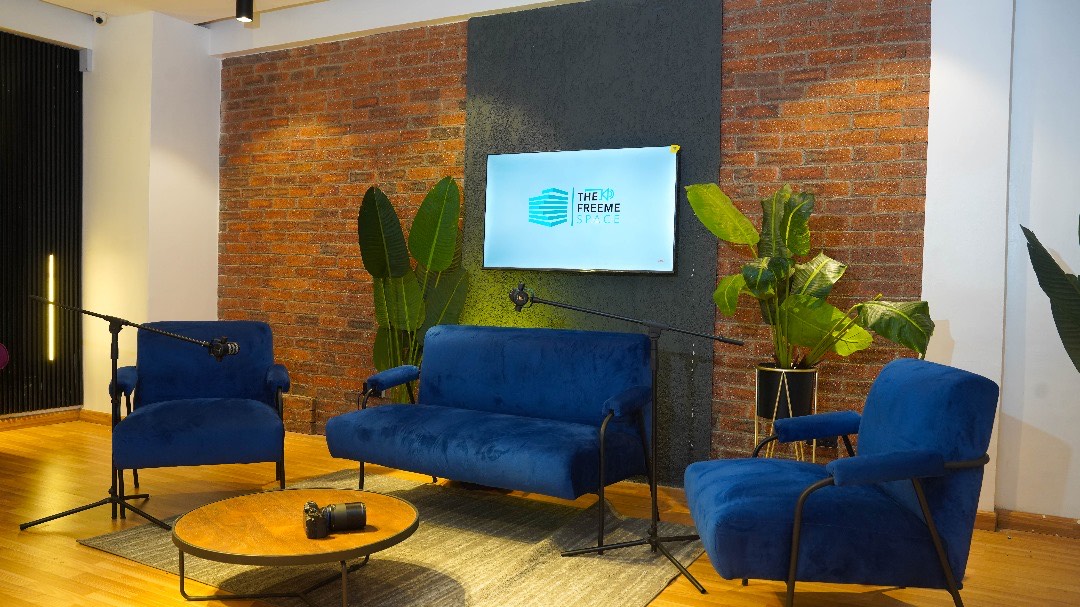
This one decision affects the room you choose, the engineer you need, how many hours you should book, and whether you need extra space for cameras or guests. If your session includes filming, performance shots, or a larger creative team, look at the FreeMe Space soundstage instead of trying to squeeze everyone into a small room. If the session is dialogue-led, the podcast studio will usually make more sense.
2. Rehearse like the studio clock is already running
Studio time feels expensive when rehearsal happens inside it. The easiest way to waste a session is to arrive with lyrics half-memorised, a structure that keeps changing, or a guest who has never heard the brief.
For artists, rehearse the full song until you can perform it without staring at your phone every two bars. You do not need to kill every spontaneous idea; some magic happens in the room. But the foundation should be ready. Know where you breathe. Know where the hook sits. Know which lines need punch-ins. If there is a difficult run, practise it before the day.
For podcasters, rehearse the opening and closing. You do not need to script every word, but you should know the first question, the key segments, and the moments where you will move the conversation forward. For voice-over, read the script out loud before the session. Words that look clean on a page can feel awkward in the mouth.
Rehearsal is not about removing soul. It is about giving the session enough structure that the best ideas have room to happen.
3. Bring the right files, not “the version on someone’s laptop”
This sounds basic, but it saves sessions. Bring the correct files in a format the engineer can use. If you are recording vocals over a beat, bring a high-quality WAV file, not a low-resolution phone export. If you have stems, label them clearly: drums, bass, keys, backing vocals, effects, reference mix. If there are multiple versions, delete or separate the old ones so the wrong file does not end up in the session.
Use a simple folder structure:
- •Artist or project name
- •Song or episode title
- •Date
- •Instrumental or stems
- •Lyrics, script, or run-of-show
- •Reference tracks
- •Notes for the engineer
Upload the folder to cloud storage before you leave home, then bring a backup on a drive if you can. Lagos sessions already have enough moving parts. Nobody needs to spend the first 30 minutes waiting for a transfer while the room is booked and everyone is seated.
4. Use reference tracks, but be specific about what you like
Reference tracks are useful when you explain them properly. Do not just say, “Make it sound like this.” Tell the engineer what you mean. Is it the dry vocal? The brightness? The low-end weight? The way the backing vocals sit behind the lead? The intimacy of the podcast voice? The roomy live feel?
Bring two or three references, not twenty. Too many references confuse the target. A good reference note sounds like this: “I like how close the vocal feels in this song, but I do not want that much reverb.” Or: “For the podcast, I want the voice to feel clean and warm, not radio-hyped.”
If you are working in immersive audio or thinking about a mix that needs more space and movement, ask whether the Dolby Atmos suite fits the next stage of the project. Not every recording session needs that room, but some projects benefit from planning the mix environment early.
5. Protect the first hour
The first hour often decides the tone of the day. Use it well. Arrive early enough to settle in, meet the engineer, test files, confirm the plan, and get comfortable. If the first hour becomes a debate about lyrics, guest arrival, missing chargers, or what version of the beat to use, the session starts with stress.
A good first hour should cover:
- •File check
- •Microphone and headphone setup
- •Quick conversation about references
- •Test recording
- •Headphone mix adjustment
- •Final confirmation of the session goal
Artists sometimes rush this part because they want to start performing immediately. Don’t. A clean setup saves time later. If the headphone mix is wrong, say so. If the room feels too cold, too bright, too crowded, or distracting, speak up early. Small fixes at the beginning prevent bad takes for the next three hours.
6. Get the headphone mix right before chasing takes
One of the least glamorous recording tips is also one of the most important: if the performer cannot hear properly, the performance will suffer. A bad headphone mix can make a singer push too hard, drift off pitch, lose timing, or feel disconnected from the track.
The performer should hear enough of their own voice to control pitch and tone. They should hear enough instrumental or guide track to stay locked in. Some artists need more kick and snare. Some need the lead melody tucked in. Some want a little reverb in the headphones so the vocal feels more natural, even if the engineer records it dry.
There is no single correct headphone mix. The correct mix is the one that helps the performer deliver. Take five minutes to fix it. That is cheaper than spending an hour recording takes that never felt comfortable.
7. Manage the room, not just the microphone
The microphone matters, but the room matters too. Keep the recording area focused. If ten people are talking behind the artist, the take will carry that tension even if the mic does not pick up the voices clearly. If a podcast guest is nervous because the room is crowded, the conversation will sound stiff. If a vocalist is performing to a wall of silent observers, the energy can drop.
Only keep the people who need to be in the room. Everyone else can wait outside, join at a review point, or come in for playback. Phones should be silent. Side conversations should happen away from the recording area. Food, perfume, smoke, and loud movement can all affect comfort and focus.
For sessions with guests, media teams, or client observers, plan the space properly. The event lounge can help when you need a holding area, listening moment, or small gathering around the session without turning the recording room into a crowd scene.
8. Record in sections, but keep the emotion alive
Punch-ins are useful. They are not a replacement for performance. If you record every line as a tiny repair job, the final take may sound technically clean but emotionally flat. The listener can feel when a vocal has no flow.
A strong approach is to record full passes first, then fix the weak parts. Let the artist perform the song from top to bottom a few times. Mark the moments that work. Then go back for sections, doubles, harmonies, and ad-libs. For podcasts, avoid stopping every two minutes unless there is a real issue. Make notes while the conversation flows, then pick up corrections at the end.
Momentum matters. The best take may not be the most perfect take. Sometimes the line with a little texture, breath, or edge carries more feeling than the cleanest version. A good engineer can help you choose, but the team should listen for emotion, not only accuracy.
9. Schedule breaks before fatigue ruins the session
Fatigue is quiet at first. The singer starts missing notes they hit easily an hour ago. The host’s questions get flat. The producer stops hearing details. The engineer is still working, but everyone is making slower decisions.
Plan breaks. For vocals, a short reset every 45 to 60 minutes can save the voice. Hydrate. Step away from the speakers. Rest your ears. For podcasts, build in a pause between episodes or long segments. For content-heavy days, separate recording blocks from playback blocks so the team is not trying to judge audio while tired.
Do not treat breaks as laziness. They are part of the session design. A tired team burns time and makes bad calls. A rested team hears problems earlier and performs better.
10. Leave with organised deliverables
The session is not finished when the last take is recorded. Before you leave, confirm what files you are getting and when. Ask for the rough bounce if needed. Confirm whether raw multitracks, edited vocals, podcast WAVs, MP3 previews, or session files are part of the handoff. Make sure names are clear.
A messy handoff creates problems later. The mix engineer receives the wrong version. The podcast editor cannot find the guest track. The label asks for a preview and nobody knows which bounce is approved. Avoid that by agreeing on deliverables before everyone leaves.
A simple handoff note might say:
- •Lead vocal comp pending
- •Two rough bounces exported
- •Separate podcast tracks recorded
- •Backup saved
- •Mix notes captured
- •Next session needed for backing vocals
This is also the point to book the next step if you already know you need it. Waiting a week can mean losing momentum or struggling to get the same room and team.
A quick pre-session checklist
Use this before your next booking:
- •Final lyrics, script, or run-of-show ready
- •Correct beat, stems, or backing tracks exported
- •Reference tracks selected with notes
- •Session goal written down
- •Guest list confirmed
- •Arrival time shared with everyone
- •Phones, chargers, drives, and laptop packed
- •Water ready for vocal sessions
- •Engineer brief prepared
- •Deliverables agreed before the session ends
Print it, screenshot it, or send it to the group chat. The point is not to make the day rigid. The point is to remove the avoidable mistakes.
Book a session that fits the work
The best recording tips will not help if the room is wrong for the job. A solo vocal session, podcast recording, live band capture, listening session, and filmed performance all need different space decisions. FreeMe Space was built for that range: the podcast studio for clean voice-led sessions, the soundstage for bigger productions, the Dolby Atmos suite for immersive mixing, and the event lounge for playback, hosting, and creative meetings.
If you know what you are recording, tell us the goal and we will point you to the right room. If you are still figuring it out, schedule a tour first. Book a session, contact FreeMe Space for rates, or come in to see the rooms before your next recording day.