Podcast Studio Lagos: Everything You Need to Know Before Recording
Podcast studio Lagos guide for creators planning audio, video, guests, clips, post-production, and a smoother recording day at FreeMe Space.
# Podcast Studio Lagos: Everything You Need to Know Before Recording
If you're searching for a podcast studio Lagos creators can trust, you're probably past the idea stage. You have a host, a topic, maybe a guest list, and now you need the room to match the ambition. That choice matters. A podcast can survive a rough thumbnail. It rarely survives bad audio, bad lighting, or a recording day where nobody knows where to sit, what to bring, or how long the session will really take.
Lagos has become one of the most active creator cities in Africa. Founders are recording thought leadership shows. Artists are turning interviews into rollout content. Churches, media teams, educators, fintech leaders, comedians, sports analysts, and culture commentators are all building audio and video channels. The demand is no longer just for a quiet room with microphones. Creators now need a production setup that can capture clean audio, record video, support guests, handle short-form clips, and give the finished show a professional feel from the first episode.
That is where the studio decision becomes serious. A good podcast studio doesn't just record your voice. It protects the conversation. It removes distractions. It gives the host confidence. It gives the editor cleaner material. It also helps the guest relax because the environment already feels like a proper media room, not a last-minute corner in an office.
This guide breaks down what to look for when choosing a podcast studio in Lagos, how to prepare for recording day, what technical details matter, and when you may need more than a podcast room.
Why podcast recording in Lagos has changed
Podcasting in Lagos used to be treated as an audio-only side project. A few microphones, a laptop, and a table were enough for many early shows. That phase taught creators an important lesson: consistency matters, but quality decides whether people stay.
The market has moved. Audiences now discover podcasts through video clips on TikTok, Instagram Reels, YouTube Shorts, and WhatsApp forwards before they ever listen to a full episode. That means your podcast session is not only an audio recording. It is also a content capture day. One strong conversation can produce a full episode, teaser clips, quote cards, behind-the-scenes footage, newsletter material, and social captions.
That shift changes what a studio needs to provide. You want clean sound, but you also need lighting that flatters skin tones, camera angles that make the conversation feel alive, and enough space for a host, guests, producer, and sometimes a photographer or social media person.
The best podcast setup for Lagos creators is practical. It should work for a solo interview, a two-person conversation, a roundtable, a branded show, or a recorded panel. It should also let you move fast. Many teams only have a few hours with a guest. Nobody wants to spend the first hour fixing hum, moving chairs, or hunting for cables.
What makes a good podcast studio in Lagos?
A good podcast studio starts with the room. The most expensive microphone in the world will not save a space with hard echoes, outside noise, and poor seating. Lagos is loud. Generators, traffic, construction, phones, doors, and corridor conversations can all ruin a take. A proper podcast room is designed to reduce those problems before recording begins.
Look for these basics:
- •Acoustic treatment that reduces echo and harsh reflections.
- •Microphones placed for speech, not singing.
- •Comfortable seating that keeps guests relaxed but upright.
- •Stable tables or stands that do not shake every time someone gestures.
- •Camera-friendly backgrounds.
- •Lighting that looks good on video without making guests sweat.
- •Easy power access for laptops, phones, monitors, and cameras.
- •A producer or engineer who can monitor the session.
The last point is bigger than most first-time podcasters realise. Recording is not only about pressing the red button. Someone should be checking levels, watching for clipping, noticing when a guest leans too far from the mic, and catching small issues while they can still be fixed. A show can lose a great moment because nobody noticed the host's microphone was too low.
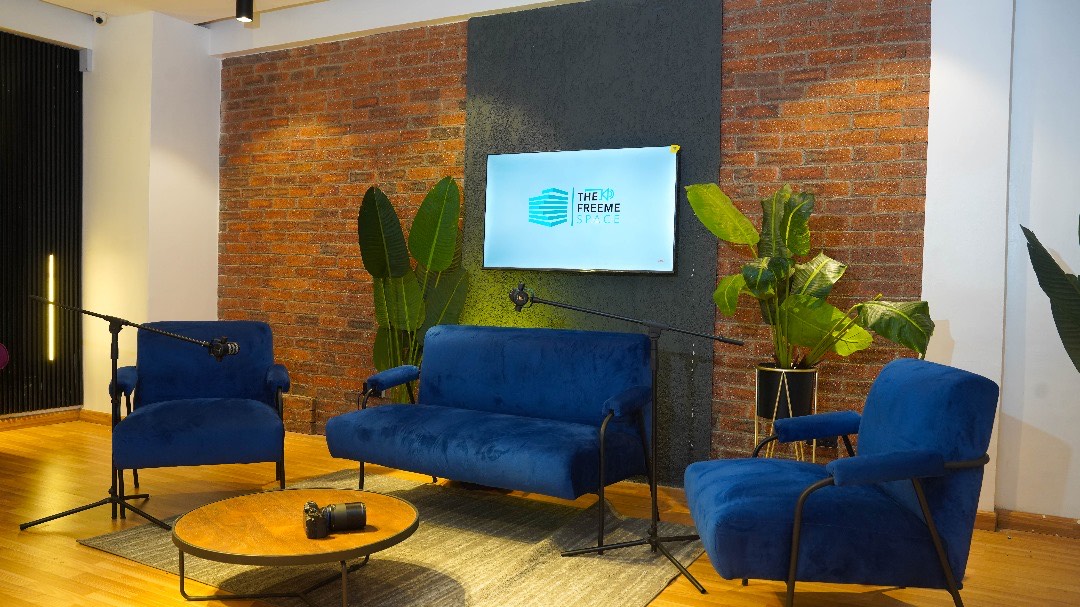
At FreeMe Space, the podcast studio is built for creators who want a focused recording environment without turning the session into a technical headache. The point is simple: let the conversation stay at the centre while the room supports the production.
Audio quality: the part your audience forgives least
People will tolerate imperfect video if the conversation is useful. They will not tolerate bad sound for long. Thin audio, echo, background hiss, uneven volume, and guests talking over each other make a podcast feel tiring, even when the topic is strong.
For Lagos podcasters, audio quality is especially important because many listeners consume episodes in noisy conditions. They may be in traffic, at the gym, walking through a market, working from an office, or listening through phone speakers. If your audio is already muddy, the real-world listening environment makes it worse.
A proper podcast studio should capture each speaker on a separate channel where possible. That gives the editor more control. If one person laughs loudly, leans back, speaks softly, or interrupts, separate tracks make the final mix easier to clean up. It also helps when pulling short clips because each voice can be balanced properly.
Before booking, ask simple questions:
- •How many speakers can be recorded at once?
- •Are voices recorded on separate tracks?
- •Is there someone monitoring levels during the session?
- •Can the studio support both audio and video recording?
- •What files will be delivered after the session?
You do not need to become an engineer. You just need to know whether the room is prepared for the kind of show you're making.
Video matters because discovery is visual
A podcast may be called a podcast, but the growth often happens through video. The clip where a guest says something sharp. The moment the host reacts. The short exchange that makes people want the full episode. That is how many Lagos shows travel now.
This is why choosing a podcast studio Lagos audiences will visually trust is part of the strategy. The set does not need to look overdesigned. It needs to look intentional. Clean framing, balanced lighting, and a background that does not distract will do more for the show than a room full of props.
Think about how the footage will be used before you record. A YouTube version may need a wider shot. Instagram and TikTok clips may need vertical crops. A sponsor may want clean shots where their product or message can appear. A guest may ask for selected clips to post on their own page.
If your studio is too cramped, those options disappear. If the lighting is poor, every clip feels amateur. If the background is messy, the editor has to fight the room instead of shaping the story.
For shows that need more room, a larger production setup like the FreeMe Space soundstage may make sense. That is useful for live podcast recordings, audience sessions, branded interviews, panel conversations, content days, or episodes that need multiple camera positions and a bigger visual treatment.
How to prepare before recording day
Most podcast problems start before the session. The studio can provide the room and technical support, but the show still needs a plan. Preparation does not mean scripting every word. It means removing avoidable confusion.
Start with the purpose of the episode. Is it a brand story, a founder interview, a culture conversation, a teaching episode, a comedy segment, or a music rollout? The format affects everything: seating, tone, pacing, number of cameras, episode length, and what clips you want afterwards.
Then prepare a simple run of show. It can be one page. Include the episode title, guest name, opening question, three to five major talking points, any sponsor mention, and the final CTA. If there are topics to avoid, write them clearly. If there are names, dates, or facts that must be correct, keep them in front of the host.
Guests also need preparation. Send them the location, arrival time, parking or access notes, dress guidance, expected duration, and the broad theme of the conversation. Tell them whether it is audio only or video. If it is video, remind them to avoid noisy jewellery, heavy patterns that distract on camera, and clothing that blends into the set.
Bring the small things too: water, chargers, a backup copy of your outline, any release forms you use, and a list of the clips you hope to capture. If the guest is important, arrive early. It is better to spend ten minutes settling into the room than to begin while everyone is still checking phones and adjusting chairs.
How long should a podcast session be?
A thirty-minute episode rarely takes only thirty minutes to record. Build in time for arrival, setup, sound check, camera framing, guest briefing, retakes, breaks, pickups, and file handling. If you are recording multiple episodes in one day, add more buffer than you think you need.
For a single interview, many teams book at least two hours. That gives enough space to settle in, record a strong conversation, capture a few short promos, and redo any rough intro or outro. For batch recording, half-day or full-day planning may be smarter. The goal is not to rush through as many episodes as possible. The goal is to leave with usable material.
A good studio team can help you estimate time based on your format. A solo host reading a prepared script is different from a four-person culture show where people debate, laugh, and talk over each other. A founder interview with two cameras is different from a branded video podcast that needs clean intros, sponsor lines, and social clips.
If you are unsure, ask for guidance before booking. The right answer depends on the show.
When your podcast needs post-production support
Recording is the first half. Post-production decides how polished the final episode feels. Clean editing removes false starts, long pauses, repeated points, mouth clicks, background noise, and moments where the conversation drifts. Mixing balances the voices so the host and guest sit at the same level. Video editing shapes the episode for YouTube and pulls clips for social platforms.
Some creators underestimate this stage. They leave the studio with files and assume the hard part is done. Then they realise they need an editor who understands pacing, captions, short-form hooks, audio cleanup, file formats, and upload specs.
Before recording, decide what you need after the session. Do you want raw files only? A fully edited audio episode? A YouTube-ready video? Ten short clips? A trailer? Captions? Thumbnails? Your answer affects how the session should be captured.
If the podcast will be part of a larger campaign, plan that from the start. A product launch, album rollout, event promotion, or founder brand series should not be treated as one isolated recording. The episode should feed the campaign.
Audio-first shows, video podcasts, and branded content
Not every podcast has the same goal. An audio-first show may care most about warmth, clarity, and a steady publishing rhythm. A video podcast needs framing, lighting, and visual consistency. A branded show has to protect the sponsor's tone without making the conversation feel like an advert.
This is why the studio conversation should begin with the format, not the equipment list. Equipment matters, but format drives the setup.
A legal, finance, health, education, or founder-led podcast may need a calm, credible set. A culture show may need a looser seating arrangement and more room for movement. A music podcast may need space for listening segments, acoustic demonstrations, or artist interviews. A church or community show may need a warmer feel and simple, direct messaging.
For music-related podcasts or shows that require high-end listening, the Dolby Atmos suite at FreeMe Space can support more specialised audio work around playback, review, and immersive sound conversations. Not every podcast needs that. But if your show is built around sound, music, film, or audio experience, it is worth considering how the listening environment affects the final product.
Common mistakes Lagos podcasters should avoid
The first mistake is choosing the cheapest room without thinking about the final output. A low booking fee can become expensive if the audio is unusable, the files are badly organised, or the video needs heavy repair.
The second mistake is arriving without a format. A podcast is not just people talking. It needs a shape. Even a relaxed conversation needs an opening, a reason to keep listening, and a clear ending.
The third mistake is ignoring short-form clips until after recording. If social discovery matters, plan the moments you want to capture. Ask sharper questions. Give guests space to answer in complete thoughts. Record a clean intro and outro. Capture a few direct-to-camera lines while everyone is already in the room.
The fourth mistake is overpacking the episode. One strong topic is usually better than six shallow ones. Lagos audiences are busy. Give them something focused enough to remember and useful enough to share.
The fifth mistake is treating the studio as a magic fix. A great room helps, but it cannot replace preparation, a good host, and a reason for the audience to care.
What to ask before booking a podcast studio in Lagos
Before you confirm a date, ask the studio team a few direct questions. You will learn quickly whether they understand podcast production or just rent rooms.
Ask about capacity. How many people can sit comfortably? Can the room handle two, three, or four speakers? Is there space for a producer or content assistant?
Ask about deliverables. Will you receive raw audio, raw video, edited files, or a package? How long does delivery take? Are clips included or separate?
Ask about technical support. Will someone monitor the recording? What happens if there is an issue during the session? Are backup recordings possible?
Ask about the look. Can you see sample frames from the room? Can the set be adjusted for your brand? Is there enough lighting for video?
Ask about logistics. Where should guests arrive? Is there a waiting area? Can makeup or wardrobe happen nearby? How early can the team access the room?
If the answers are vague, pause. Your recording day depends on details.
Why FreeMe Space works for podcast creators
FreeMe Space is built for creative work that needs to move from idea to usable asset without chaos. For podcasters, that means access to a focused podcast room, larger production spaces when needed, and a team that understands Lagos creator workflows.
A show may begin in the podcast studio and later grow into live recordings, branded video sessions, or a bigger content day. A founder may start with a simple interview series and later need a full campaign shoot. A media team may record the main episode in the podcast room, then use the lounge or wider facility for behind-the-scenes material.
The advantage is not only the room. It is having options under one roof. If your show stays simple, you keep it simple. If it grows, the facility can grow with it.
That matters in Lagos, where time, traffic, power, and coordination can turn a small production into a stressful day. The more you can solve in one properly run facility, the better your chances of leaving with clean content.
Final checklist before you book
Before you book any podcast studio Lagos has to offer, answer these questions:
- •What is the episode format?
- •How many speakers will be recorded?
- •Is the show audio only, video, or both?
- •Where will the final episode be published?
- •Do you need short clips for social platforms?
- •Who is responsible for editing?
- •What files should be delivered?
- •How much setup and buffer time do you need?
- •Does the room match the tone of your show?
- •Is there technical support during the session?
If you can answer those questions, your recording day will be calmer and your final episode will be stronger.
Podcasting rewards consistency, but consistency only works when the production process is repeatable. Choose a room that helps you build that rhythm. Bring a clear plan. Give your guest a good experience. Capture the conversation properly the first time.
Ready to record? Book the FreeMe Space podcast studio, ask for current rates, or schedule a tour of the facility so your team can choose the right setup before recording day.